


The Demand Gap That Cannot Be Ignored
Saudi Arabia has spent the better part of two decades solving what appeared to be an outbound student crisis. The King Abdullah Scholarship Program (KASP), launched in 2005 and extended multiple times, became one of the world's most ambitious government-funded overseas study programs, sending more than 300,000 Saudi students to universities in the United States, United Kingdom, Canada, Australia, and across Europe. At its peak, the KASP represented one of the largest single-country pipelines of internationally mobile students in the world, making Saudi Arabia the fifth-largest source country for international students globally at one point. The program was logical and well-intentioned. The Kingdom had a higher education system that could not produce the graduate volumes and program quality needed to fuel Vision 2030's knowledge economy ambitions, and the fastest solution was to borrow the world's best universities as interim providers.
The strategic calculus is now changing, and the shift carries investment implications that the market has not yet fully mapped. Saudi Arabia needs approximately 900,000 additional higher education places by 2030, a 42% increase over the roughly 2 million places currently provided, predominantly by the state according to analysis cited by the ICEF Monitor's 2025 study on MENA student mobility and foreign campus activity. That gap cannot be filled by exporting students abroad. The fiscal cost of large-scale scholarship programs has grown, the geopolitical case for building domestic capacity has strengthened, and Vision 2030's workforce nationalization agenda explicitly requires graduates who are shaped by Saudi labor market needs rather than foreign university curricula oriented toward their own economies. The logical response and the one the Kingdom is now executing is to bring the universities in.
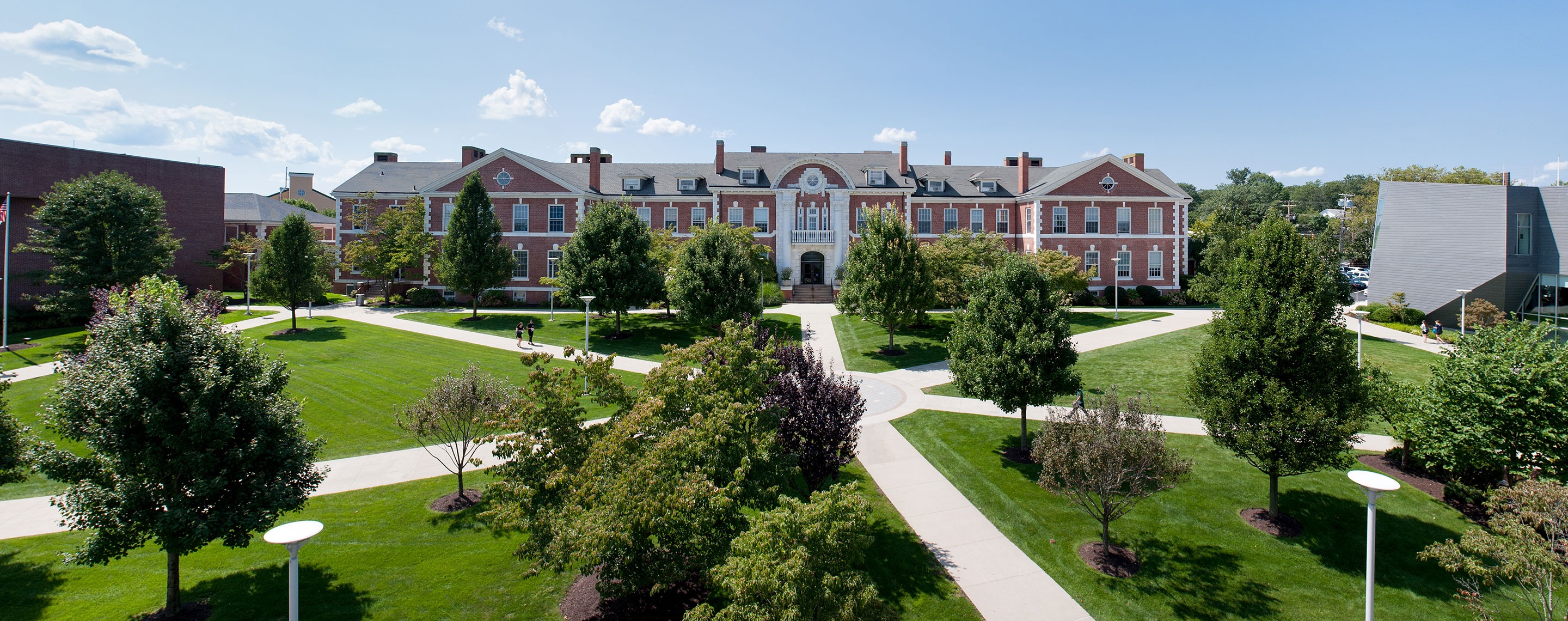
The commercial and regulatory architecture being assembled to enable that import is the focus of this article. In 2024, Saudi Arabia awarded foreign investor licenses to five international universities, opening the way for branch campuses offering bachelor's and master's programs in priority areas including healthcare, engineering, and business, according to University World News's September 2024 reporting. The University of New Haven became the first institution to receive formal approval to open an international branch campus in the Kingdom, signing a memorandum of understanding with Saudi Arabia's Ministry of Education, Ministry of Investment, and the Royal Commission for Riyadh City at the 2025 Human Capability Initiative, with a branch campus in Riyadh targeted to open in Fall 2026 and eventually serve 13,000 students. Arizona State University signed an MOU in March 2024 with Saudi ministries to establish a new university and affiliated school in Riyadh, focused on STEM, economics, and educational staff development. In parallel, the Council of Ministers approved the creation of 10 new private colleges in 2024, with new executive rules allowing foreign university branches to establish independent campuses under five-year renewable licensing frameworks. The pace of entry is accelerating, the regulatory framework is becoming clearer, and the commercial model is being written in real time.
The Global Context: Transnational Education as Institutional Capital Allocation
To understand the Saudi higher education opportunity, it is necessary to first situate it within the global transnational education trend that has been developing since the 1990s but that has accelerated dramatically in the post-pandemic period. In 2022, an estimated 6.9 million students were studying outside their home countries, a 176% increase over the 2.5 million mobile students counted in 2002, according to UNESCO Institute for Statistics data. The trajectory toward 10 million internationally mobile students by 2030 is well-supported by current growth rates. Most of this mobility flows toward a small number of established destination countries: the United States, United Kingdom, Australia, and Canada collectively host the majority of the world's international students.
But the more strategically consequential trend is not the volume of students moving outbound from developing and emerging economies, it is the accelerating reverse flow, where the educational infrastructure itself moves to where the students are, rather than requiring students to relocate to where the infrastructure exists. Branch campus activity globally has grown from a niche phenomenon to a mainstream institutional expansion strategy. The C-BERT Branch Campus Listing, the primary global database of international branch campuses, documented over 300 active international branch campuses worldwide as of its most recent update, with the Middle East and specifically the UAE concentrated as one of the most significant host regions globally. Dubai's Knowledge Village and Academic City model, a regulatory free zone specifically designed to attract foreign universities, has hosted over 30 international university branches and demonstrated that international higher education institutions can be commercially successful in a Gulf context when the regulatory environment is appropriately designed.
For institutional investors, this global expansion of transnational education represents an emerging real asset category. Private equity capital, sovereign wealth vehicles, and education-focused impact funds have been building positions in private higher education operators, student housing REITs, and education technology platforms in markets from Australia to Southeast Asia. The Saudi Arabia market, with its combination of large domestic unmet demand, government capital backstopping the transition, and an explicitly stated privatization mandate, represents one of the most compelling emerging market higher education investment opportunities of the current decade provided investors understand the regulatory model, the competitive landscape, and the adjacent asset implications with sufficient granularity to underwrite positions that reflect the market's actual risk-return profile.
Regional Landscape: The GCC's Higher Education Race and Saudi Arabia's Strategic Position
The Gulf Cooperation Council collectively faces a shared version of the Saudi higher education challenge, but with important differences in scale, policy approach, and market maturity. The UAE has the most advanced transnational higher education ecosystem in the region, built through a deliberate and sustained free zone strategy. Knowledge Village and Academic City in Dubai have attracted branches of University of Birmingham, Michigan State University, Middlesex University, Murdoch University, and dozens of others, creating a genuine international academic marketplace within a single square kilometer of real estate. The regulatory model is student-friendly programs are taught in English, degrees are internationally accredited, and graduates can transition between academic and professional environments within the UAE's multicultural labor market. Abu Dhabi's ADEK (Abu Dhabi Department of Education and Knowledge) has separately attracted NYU Abu Dhabi, the Sorbonne Abu Dhabi, and the Paris-Sorbonne Abu Dhabi campus, offering research-intensive university experiences for a predominantly international student body.
Qatar's Education City model, a Qatar Foundation initiative hosting six American universities including Cornell Medicine, Carnegie Mellon, Georgetown, Northwestern, and Texas A&M on a single research campus represents the most ambitious sovereign-funded university attraction program in the world and provides the regional precedent most relevant to Saudi Arabia's ambitions. Education City has demonstrated that international universities can operate research and teaching programs at genuine scale in a Gulf context, that American accreditation can be maintained within branch campus structures, and that the synergies between university research and sovereign economic development agendas can be mutually reinforcing. The Qatar model's central lesson is that sovereign capital patience and a willingness to subsidize the early years of campus development while the student enrollment base builds is the decisive enabler of successful transnational campus establishment.
Saudi Arabia's approach differs from both the UAE and Qatar models in critical ways. Unlike the UAE's free zone model, which attracted predominantly private, commercially-oriented operators, and unlike Qatar's sovereign-funded model, which is explicitly non-commercial in its immediate returns, Saudi Arabia is building a framework that explicitly invites private institutional investment into higher education delivery alongside government-partnered arrangements. The five-year renewable licensing framework for foreign university branches, the MISA foreign investor license pathway, the Council of Ministers' approval of new private colleges, and the Human Capability Development Program's explicit target of increasing private sector involvement in higher education all signal a market architecture designed to generate investable commercial flows rather than purely policy-subsidized outcomes.
Saudi Arabia: The Commercial and Regulatory Model Taking Shape
The commercial model for international campus entry in Saudi Arabia operates through a layered approval architecture that an investor must understand before evaluating any specific market entry opportunity. The primary gateway is the Ministry of Investment (MISA), which issues foreign investor licenses that grant international educational institutions the legal status to operate as commercial entities within the Kingdom. This license, typically the first step, enables the institution to execute contracts, hire staff, lease or develop property, and operate bank accounts within the Saudi regulatory framework. MISA's issuance of five foreign investor licenses to international universities in 2024 marked the formal opening of this pathway at meaningful scale, though individual institutions report that the process remains detailed and documentation-intensive.
The secondary layer is the higher education operating license issued by the Higher Education Institutions Authority (HEIA), which oversees program standards, faculty qualifications, accreditation requirements, and student services standards for all higher education providers in the Kingdom, including international branch campuses. Programs must address priority sectors healthcare, engineering, business, and information technology are consistently identified and must satisfy HEIA's requirements for accreditation recognition from both the home institution's national accrediting body and, increasingly, Saudi-specific quality frameworks. The University of New Haven's Riyadh campus, for example, is pending approval from the New England Commission of Higher Education (NECHE) demonstrating that both US regional accreditation and Saudi regulatory approval must run in parallel, creating a compliance timeline that institutions should plan for over 18–24 months from initial MOU signing to first student enrollment.
The third structural element is the partnership with public entities, specifically the Royal Commission for Riyadh City, which has taken an active role in facilitating campus establishment within Riyadh's urban development framework, and the Ministry of Education, which sets the broader policy environment within which all higher education providers operate. The three-party MOU structure signed by the University of New Haven (Ministry of Education, Ministry of Investment, and Royal Commission for Riyadh City) has effectively become the template for international campus agreements and signals that major urban development projects in Riyadh are embedded within the higher education expansion agenda. This tripartite structure matters for investors because it implies that campus development is being facilitated within planned districts where land allocation, infrastructure support, and student demand density are curated at the city-planning level, reducing some of the demand uncertainty that typically challenges new higher education entrants.
The government's education budget commitment provides the demand-side backstop that makes this commercial model viable. The Kingdom allocated SAR 201 billion (approximately $53.5 billion) to education in 2025 representing 16% of total government spending. Within that allocation, higher education and vocational training received 42% of education funds, according to IMARC Group's 2025 analysis. This translates to roughly SAR 84 billion dedicated annually to the higher education sector, encompassing faculty salaries, research funding, scholarship programs, and infrastructure investment. The private higher education market operates alongside this government commitment rather than substituting for it and the adjacent student financing opportunity, discussed later in this article, is directly enabled by the government's budget commitment.
The private higher education market is already growing from an early but expanding base. Grand View Research estimates the Saudi Arabia higher education market at USD 5.675 billion in 2023, growing at a CAGR of 13.7% to reach USD 13.9 billion by 2030. Saudi Arabia currently hosts approximately 25 private universities and colleges alongside 30 public universities, serving a combined enrolled student base of approximately 2.2 million students. The Council of Ministers' approval of 10 new private colleges in 2024 with a focus on market-responsive programs in business, healthcare, engineering, and information technology signals an acceleration in the licensing pace that should translate into meaningful new private capacity within the 2026–2030 delivery window.
The International Brand Entry: What It Means for Domestic Competition and Student Demand
The arrival of internationally branded higher education institutions into the Saudi market creates a competitive dynamic that domestic public and private universities must navigate carefully. Saudi Arabia's public university system is globally visible: KAUST (King Abdullah University of Science and Technology) led the Times Higher Education Arab University Rankings in December 2024, King Fahd University of Petroleum and Minerals ranked second, and King Saud University third. These flagship institutions, heavily research-funded and with internationally recruited faculties, are not immediately threatened by the entry of mid-tier international branch campuses. Their graduate output, their research reputation, and their government resource base give them a structural competitive moat.
The competitive pressure lands elsewhere. Saudi Arabia's private university sector institutions such as Prince Sultan University, Alfaisal University, Dar Al Hekma University, and Effat University has been built largely on the premise of providing internationally-oriented English-medium education within the Kingdom, often in partnership with foreign accrediting bodies. These institutions charge tuition fees in the SAR 25,000–60,000 per year range and attract students whose families can afford private education but who prefer an in-Kingdom option to overseas study. International branch campuses with recognizable American or British brand names, operating in English, and offering degrees with home-country accreditation will compete directly in this segment raising the quality bar for every private operator in the market.
The demand they will collectively serve is not just the existing private student base. A new category of demand will emerge: Saudi students who would previously have studied abroad under KASP or at family expense, but who now have access to internationally accredited programs within the Kingdom that satisfy the quality expectations associated with overseas study while eliminating the personal and cultural dislocation that studying abroad entails. Visa restrictions, political uncertainty, and rising costs in destination countries like the United States and United Kingdom have been structurally reducing the attractiveness of overseas study for some Saudi students. A University of New Haven campus in Riyadh, offering American accreditation and an American academic model within the Kingdom, competes directly with studying at the University of New Haven's Connecticut campus and for many families, the Saudi option may be the preferred one on social, cultural, and financial grounds.
This demand substitution effect will be gradual rather than immediate, but it carries a clear commercial implication: the total addressable market for private, internationally-oriented higher education in Saudi Arabia is larger than the current private university enrollment base suggests, because it encompasses both existing private higher education demand and a portion of the previously-exported overseas student demand that will repatriate as in-Kingdom quality improves.
Sub-Sector Analysis: Student Financing, Adjacent Real Estate, and the EdTech Layer
The arrival of international campuses at commercial scale creates demand in three adjacent markets that the investment community has not yet fully considered: student financing, student housing real estate, and digital learning infrastructure.
On financing, Saudi Arabia's higher education market operates almost entirely through three channels: government scholarships (primarily KASP and its successors), family self-funding, and employer sponsorship for graduate and professional programs. There is effectively no consumer student loan market in the Kingdom comparable to the US federal student loan system or the UK student finance model. As private higher education tuition costs rise, international branch campus programs will likely command a premium over domestic private university rates, with annual fees potentially in the SAR 60,000–120,000 range for internationally-accredited programs. The absence of a structured student lending product creates both a market barrier and an opportunity. Sharia-compliant student financing, structured as Murabaha or Ijara products rather than conventional interest-bearing loans, represents an underpenetrated segment for Saudi Islamic banks and fintech lenders. The Human Capability Development Program's explicit focus on financing higher education as part of Vision 2030's human capital agenda is likely to produce regulatory support for such products within the current plan period. For financial sector investors, the student financing market adjacent to private higher education expansion is a lending product category that will require definition and early positioning.
On real estate, student housing is perhaps the most immediately investable adjacent opportunity created by international campus entry. Saudi Arabia's existing public universities provide on-campus dormitory accommodation, primarily gender-segregated, for a portion of their student bodies. Private universities and international branch campuses in the start-up phase will typically have limited or no purpose-built student residential capacity, relying on the broader rental market to accommodate non-local students. As Riyadh absorbs multiple new private and international campuses simultaneously the University of New Haven, the Arizona State University-partnered institution, the 10 newly licensed private colleges, and whatever additional licenses HEIA issues in 2025 - 2026 the demand for quality student-oriented housing within reasonable commuting distance of these campuses will increase materially. The Build-to-Rent analysis covered in Tanmeya's preceding article is directly applicable here: purpose-built, professionally managed residential communities within academic corridors are a natural adjacent development that Saudi institutional real estate capital should be evaluating in parallel with academic campus investments.
On digital infrastructure, Saudi Arabia's higher education digitalization is accelerating rapidly. The nationwide AI curriculum reaching more than 6 million students from 2025–2026, 86% of Saudi universities offering AI-focused undergraduate degrees, and the Saudi Data and Artificial Intelligence Authority's collaboration with Oxford University for an AI boot camp program all indicate an education sector that is investing in technology infrastructure at a pace that creates commercial opportunity for digital learning platform providers, learning management system vendors, and education technology companies with specific Saudi market adaptations. Saudi Arabia's EdTech market was valued at USD 810.2 million in 2024 and is projected to reach USD 1.9 billion by 2032 at an 11.5% CAGR, according to P&S Intelligence. Higher education-specific EdTech is expected to grow at the fastest pace within the market. For technology investors, the arrival of internationally oriented campuses with high expectations for digital learning infrastructure creates a premium institutional buyer segment that domestic EdTech players are currently not fully equipped to serve.
[Gaps, Risks, and the Regulatory Unknowns
For institutional investors, the Saudi higher education internationalization story carries a specific set of risks that deserve analytical attention before capital is committed. The most important is regulatory sequencing. The licensing framework for foreign branch campuses is new, the precedent set is thin, and the interpretation of requirements particularly around accreditation recognition, curriculum standards, and Saudization requirements for academic and administrative staff will evolve through a case-by-case process rather than through a mature and stable regulatory environment. The five-year renewable license structure creates renewal risk that long-duration investment projects must account for explicitly. A campus that requires 3–4 years to reach stable enrollment and 7–8 years to reach financial sustainability needs regulatory certainty well beyond a single five-year license term.
The second risk is demand calibration. The 900,000-place gap is a structural need, but the willingness to pay for international-brand education at premium private fee levels is concentrated in specific income segments of the Saudi population. International branch campuses positioned at price points above SAR 80,000 per year will find their addressable market limited to a relatively small share of the total demand cohort, those wealthy enough to pay without scholarship support and aspirational enough to specifically value the international brand over lower-cost domestic private alternatives. Government scholarship support for private and international campus students would significantly expand this market, but the policy architecture for extending KASP-equivalent support to domestic private and branch campus study rather than overseas study has not yet been fully articulated.
The third risk is Saudization in the academic labor force. Saudi Arabia's broader Saudization agenda applies across all sectors, and higher education is not exempt. International universities operating branch campuses will need to demonstrate progressive employment of Saudi academic staff, Saudi administrative personnel, and Saudi researchers, a requirement that will be challenging in the near term given the limited supply of Saudi nationals with the academic credentials and research experience required for faculty positions at internationally accredited institutions. Joint faculty development programs between branch campuses and Saudi public universities, and structured PhD scholarship programs that create the next generation of Saudi academics, are likely to become regulatory requirements over time.
The Strategic Investment Architecture
Translating the international campus thesis into investable positions requires specificity about structure, horizon, and risk tolerance. The most direct investment exposure is through equity participation in private higher education operators either the Saudi entities that hold the HEIA operating licenses and commercial franchise agreements with international universities, or the property and development companies building the campus physical infrastructure. The NEOM academic framework represents a distinct and currently opaque track within this landscape: NEOM's masterplan includes an educational cluster whose academic model and commercial structure have not been publicly detailed, but whose scale and sovereign backing suggest it will attract globally significant academic partners beyond what conventional market processes would produce.
The adjacent student housing and student financing opportunities are accessible through different investment vehicles, real estate development partnerships, Islamic finance product development with Saudi banking partners, and EdTech venture capital, each with their own risk profiles and return expectations. Patient capital with a 7–12 year horizon is most appropriate for campus development investment; the financing and EdTech adjacencies are more amenable to 4–7 year private equity horizons as the regulatory and market architecture clarifies.
Conclusion: The Import of Human Capital Infrastructure
Saudi Arabia is not simply attracting foreign universities. It is importing human capital infrastructure, the institutional scaffolding through which a knowledge economy is built and sustained as a deliberate and sequenced act of national development strategy. This is a fundamentally different investment context from markets where private higher education is driven by consumer demand for social mobility or where transnational education is an opportunistic commercial exploit by universities seeking revenue diversification. The Saudi context embeds international campus entry within a sovereign development agenda, which means the demand is underwritten at the policy level, the regulatory momentum is oriented toward market development rather than market restriction, and the adjacent capital needs financing, real estate, and digital infrastructure are real and growing.
For institutional investors who have watched the Asian private higher education boom of the 2000s and 2010s, the Latin American online education surge of the 2015–2020 period, or the African education infrastructure buildout currently underway, the structural markers in Saudi Arabia are familiar: young population, demonstrated demand, policy-backed supply creation, and a private sector that is beginning to organize itself to capture the commercial opportunity. The specific contours of the Saudi model, its Sharia compliance requirements, its regulatory architecture, its labor market alignment mandate, and its sovereign capital availability are unique, and they require investors with regional expertise and patient capital horizons. But the fundamental thesis is straightforward: the Kingdom needs 900,000 more higher education places, it cannot build them all publicly, and it is now systematically creating the conditions for private and international capital to supply them.





.svg)
